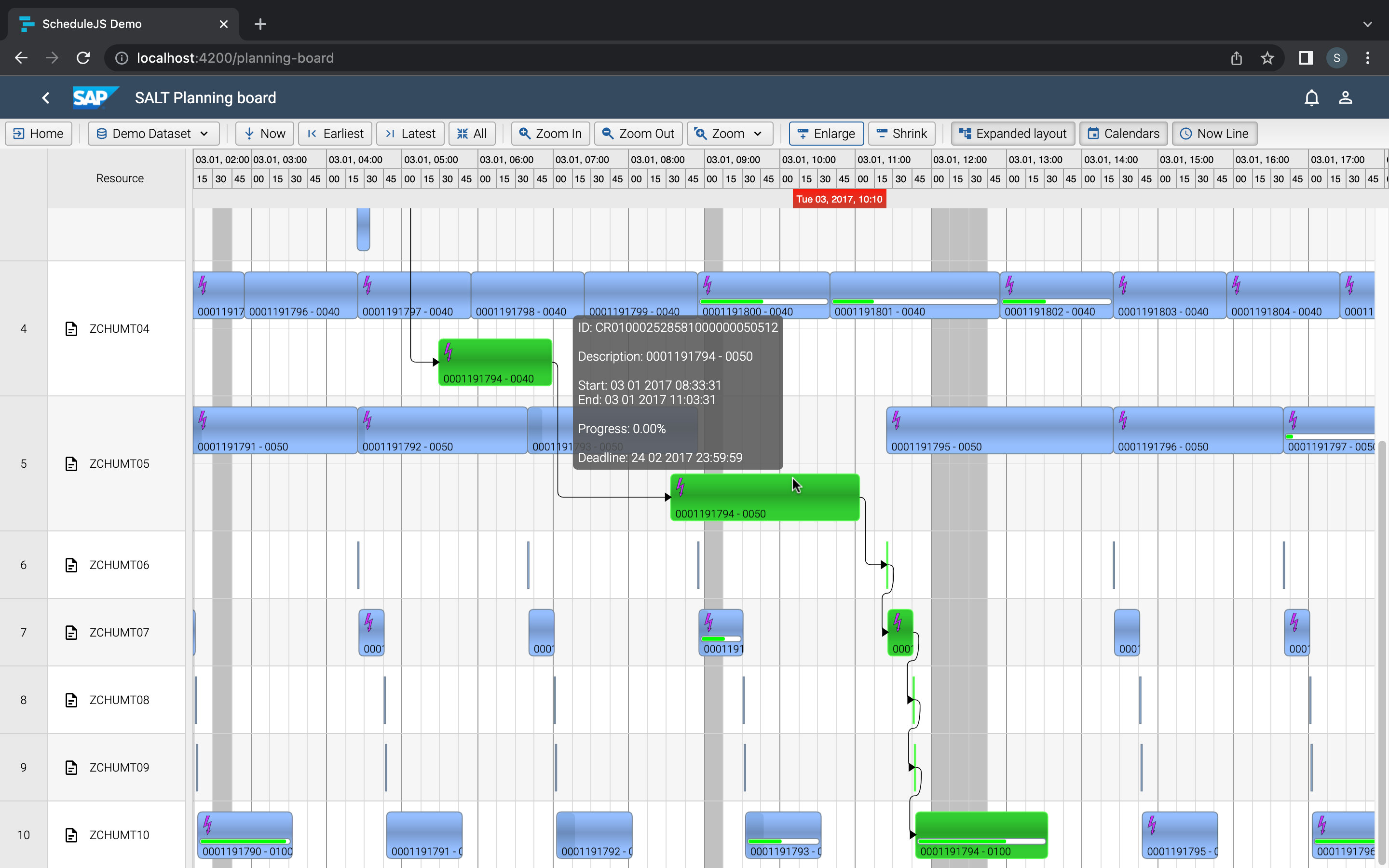
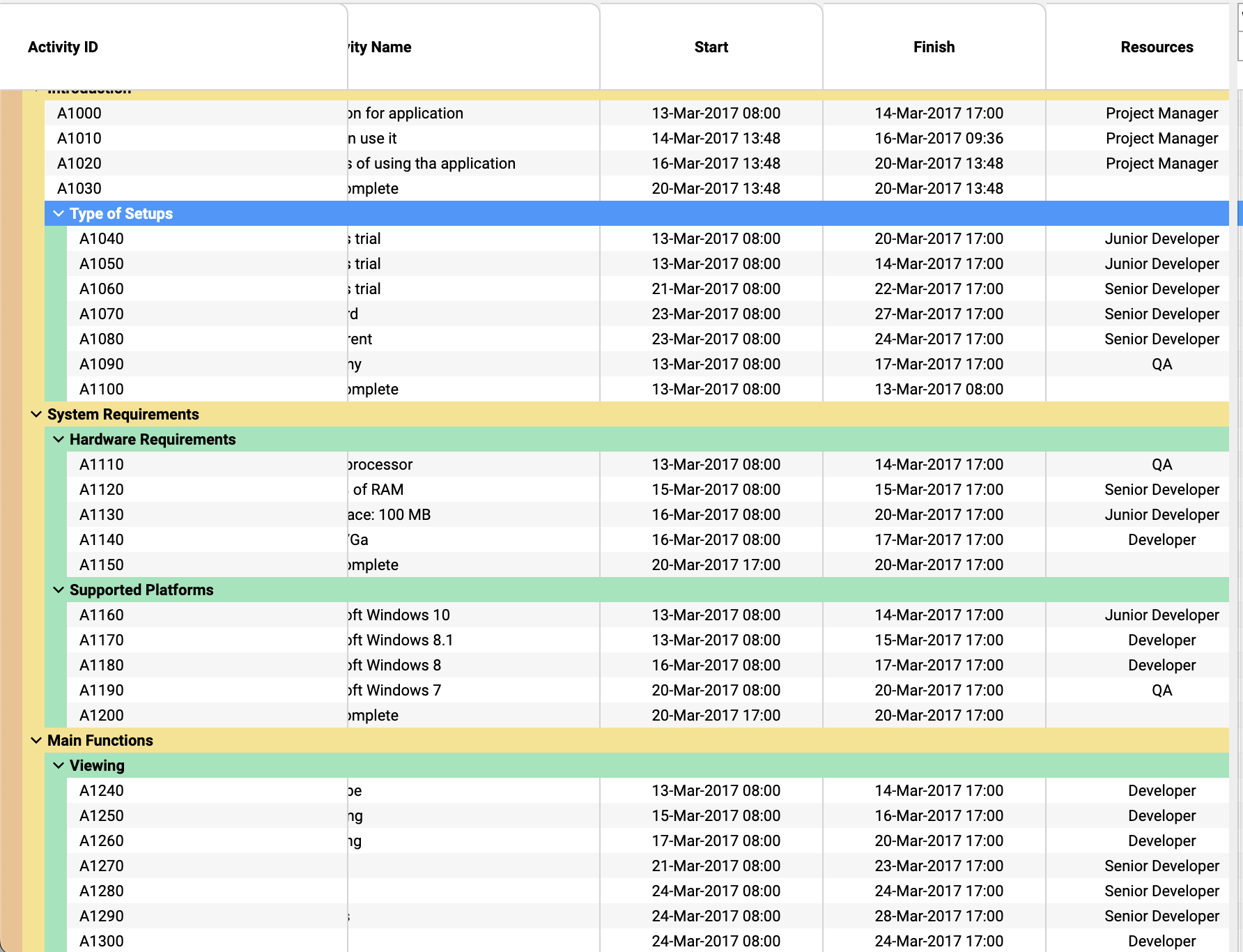
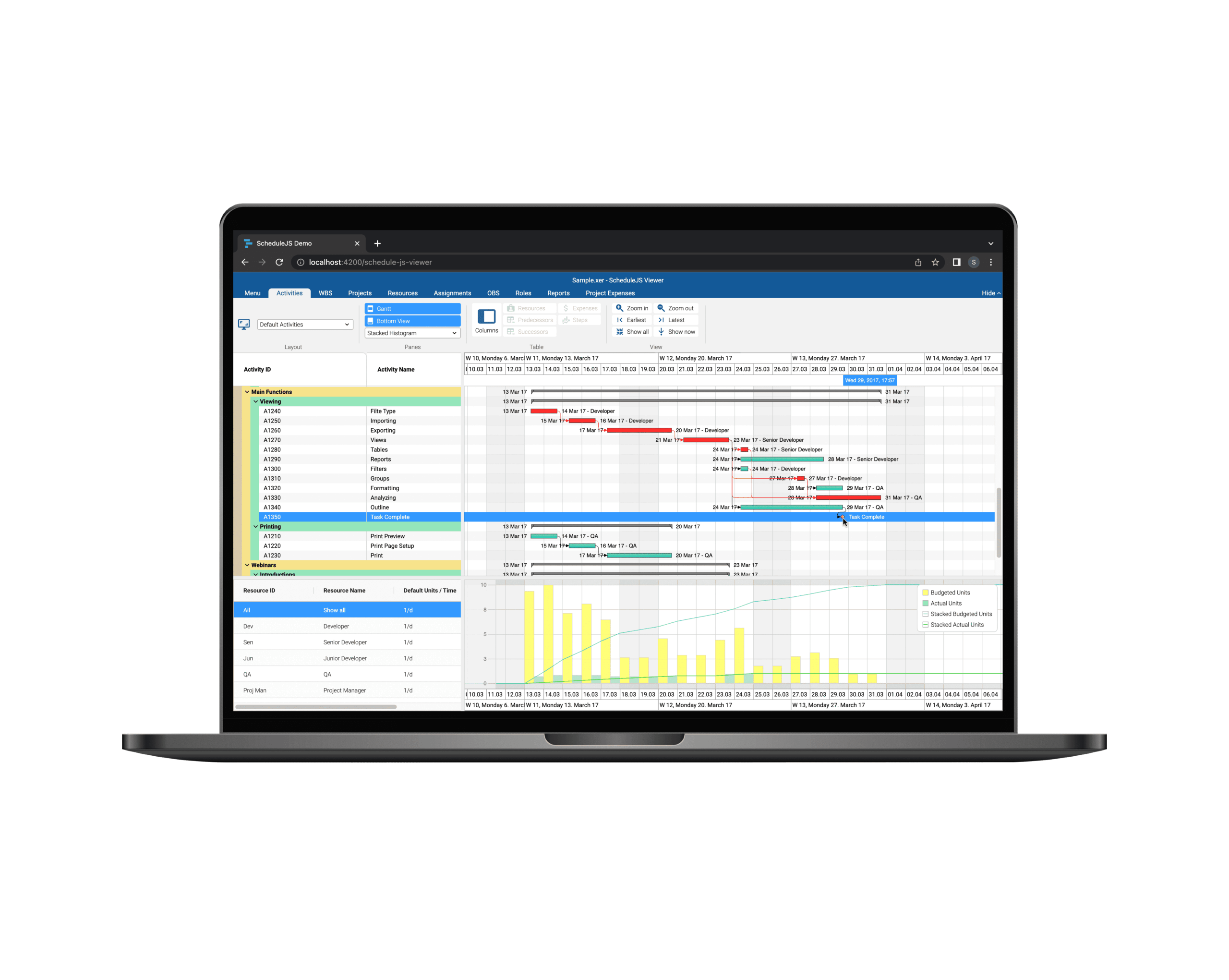
Unlock flexible row management in ScheduleJS: control individual row heights, mix GanttLayout and ChartLayout in the same view.
Its activity renderer is triggered by the DragViewTransversalSystemLayer to draw on the above-view canvas. Any activity-related logic will be drawn by the renderer during dragging operations.
Activities can be created in dragging mode using the graphics ActionContext. Activities created this way follow the same behavior as standard dragged activities.
Access the drag canvas in the drawLayer method called by DragViewTransversalSystemLayer. Like any ScheduleJS class, you can extend this class to:
TransversalSystemLayer with custom codeScheduleJS lets you act on the graphics and trigger any operation in reaction to events. You can for example modify the tree rows structure, trigger system layers specific modes, adapt the grid, and play with any ScheduleJS API you like.
The Angular viewport features various methods for scrolling to specific rows.
The example below demonstrates that you can scroll to a specific row based on events even if they are coming from outside of the desired Gantt context. Note that multiple options and parameters are available to fine-tune and create the perfect scrolling behaviour.
When a list is filtered during dragging but the filter is removed after dropping, users might want to see where they dropped the activity. In such case, you can trigger a scroll action in the onActivityDragFinished event callback using the ScheduleJS scrolling API methods.
ScheduleJS implements the same setEditModeCallback method as FlexGanttFX. It permits to define what kind of dragging operations are permitted after running validations based on the current state of your app for candidate activity.
Unlock flexible row management in ScheduleJS: control individual row heights, mix GanttLayout and ChartLayout in the same view.
Master drag and drop in ScheduleJS: render activities while dragging, access the drag canvas via DragViewTransversalSystemLayers.
ScheduleJS 1.4 release notes. A step forward towards modern Angular app building.
Angular 16 vs Angular 18 comparison: discover what's new in Angular, the arrival of signals, Zoneless mode, zone coalescing, and their impact on your projects.
Discover the Angular Rome Conference: workshops, domain-driven design, signals, state management, micro frontends.
Discover Angular 18: zoneless mode, zone coalescing, native await, and TypeScript 5.4 compatibility.
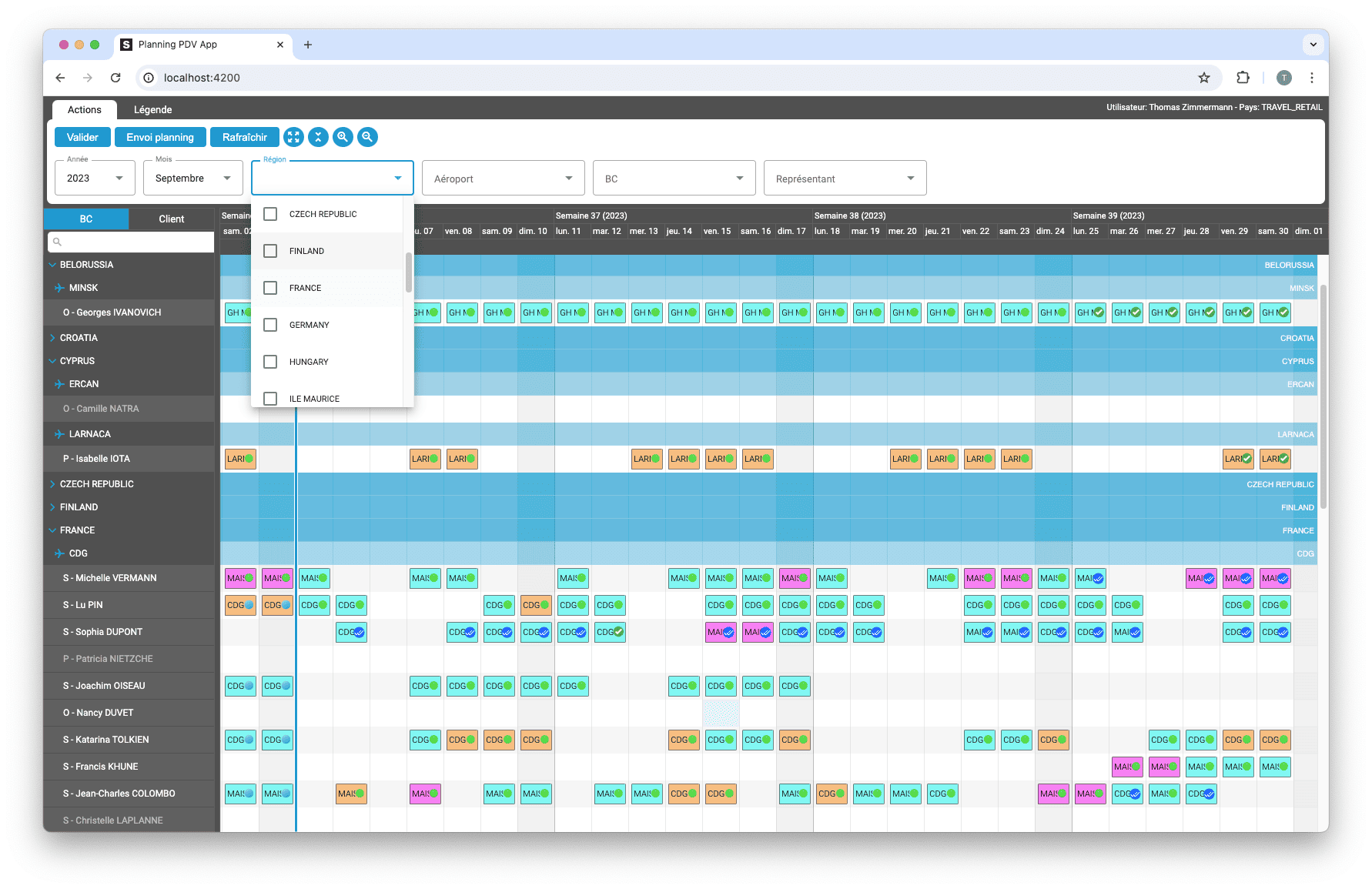
The TOP 3 JavaScript Gantt chart. Discover their features, advantages, and disadvantages to choose the best tool for your project.
Discover how ScheduleJS seamlessly integrated with Selligent CRM, enhancing scheduling efficiency for a leading beauty brand's consultants.
This article showcases the integration of a ScheduleJS component into an external Ag-Grid table, to demonstrate the flexibility of ScheduleJS.
How to synchronize multiple graphics? Learn how to reuse your ScheduleJS timeline in multiple graphics to keep them synchronized.
© Copyright 2026 – Site Map – All rights reserved – Privacy Policy – Terms of use – Cookies Policy – AISO SA